
SatuRT
Overview
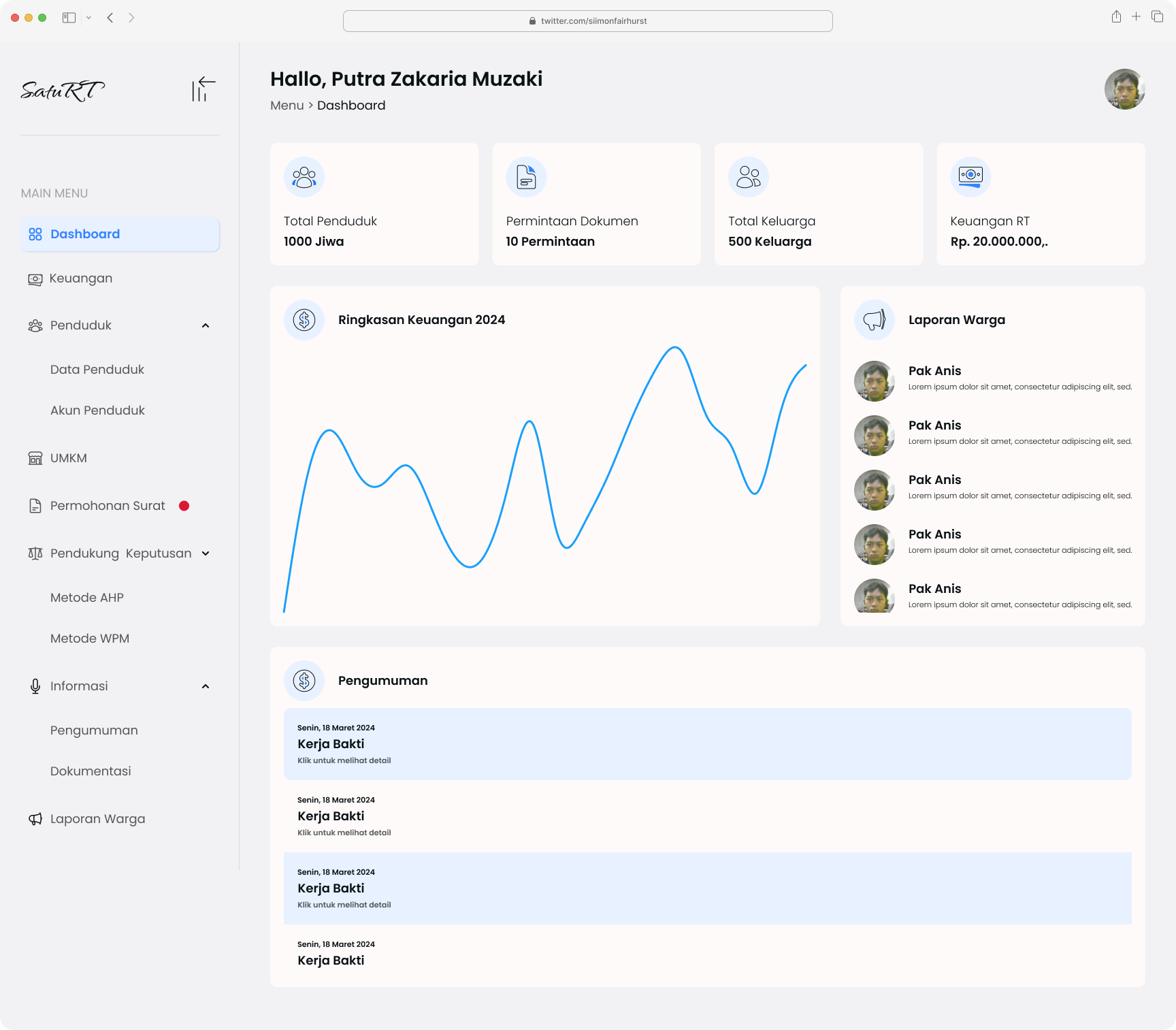
SatuRT is a neighborhood association (RT) management system built for a Framework Programming course on Laravel. It handles resident data, family cards, finances, complaints, document requests, UMKM listings, announcements, and inventory borrowing for a single RT. On top of the daily operations, it runs a generic Decision Support engine with 7 SPK methods that rank activities, aid recipients, or any alternative against weighted criteria. The system deployed live at saturt.cloud for real-world testing.
Problem
- RT associations keep resident data, dues, and events on paper or scattered spreadsheets, which leads to loss and inefficiency
- The course required a Decision Support System that ranks alternatives against weighted criteria
- The team needed clear delegation: CRUD work to members, architecture and decision logic to the lead
- Existing neighborhood tools lacked the analytics needed for data-driven decisions
Goal
- Build a Laravel app with role-based access control using Laravel Sanctum and role middleware
- Ship a generic Decision Support engine that works for any criteria set, not one hard-coded case
- Generate official letters as PDF and keep a running balance of RT finances
- Deploy to a live server for real-world use and demonstration
Role
I led the architecture and core implementation, delegated the CRUD work to teammates, and focused on RBAC, the decision-support engine, and the production deployment. Team: Achmad Raihan Fahrezi Effendy (Lead Developer) + 3 teammates
Architecture
flowchart TD
    A["Browser (Blade + Tailwind + Alpine)"] --> B["Laravel Router"]
    B --> C["checkRole middleware"]
    C --> D["Controller"]
    D --> E["Service layer"]
    E --> F["Model"]
    F --> G[("MySQL")]
    D --> H["DecisionMakerService"]
    H --> I["7 SPK engines"]
    D --> J["DomPDF"]
    D --> K["Intervention Image"]
    L["Sanctum"] --> C
The app follows standard Laravel layering with a service layer on top. DecisionMakerService is the base for 7 SPK engines that all read the same kriteria, alternatif, and kriteria_alternatif tables. Sanctum guards both web and API routes, and a checkRole middleware enforces the RT and resident roles.
Database Design
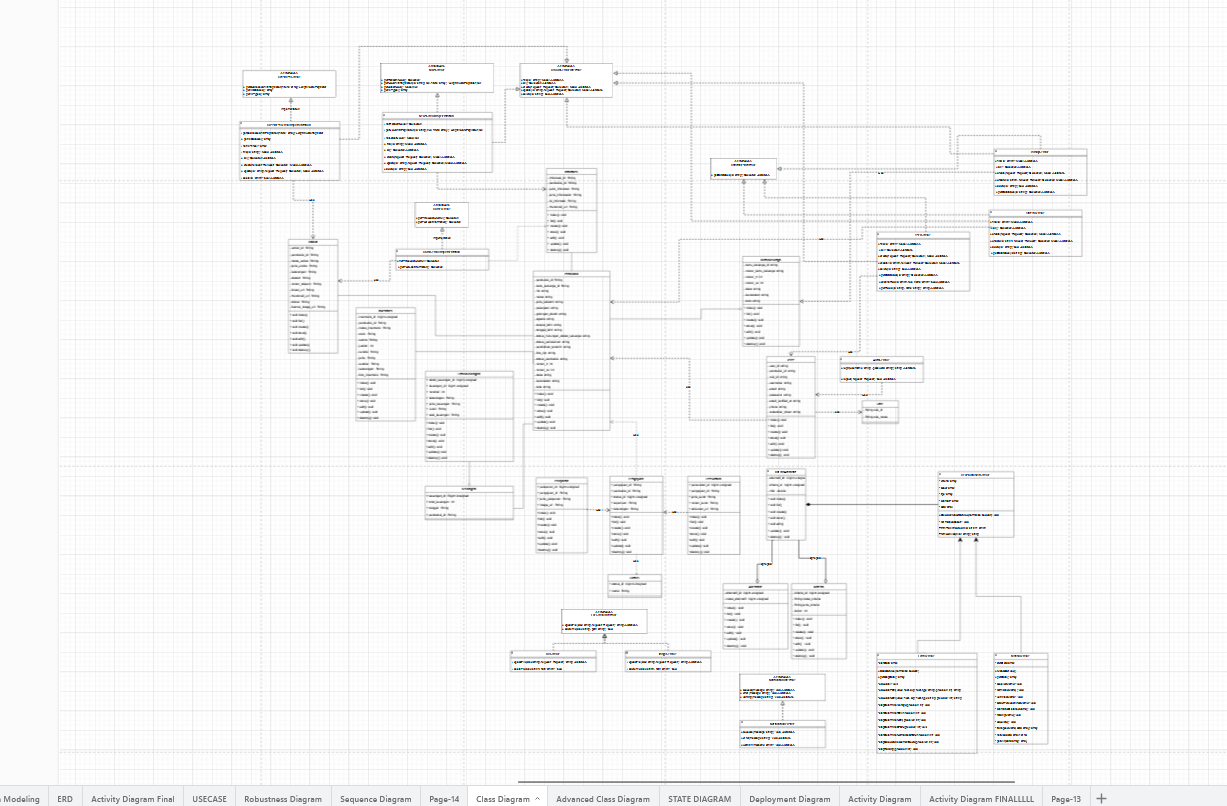
Twenty tables model the RT domain. Residents belong to family cards, every document request and complaint is a pengajuan with a status, finances keep a running balance, and the SPK module stores criteria, alternatives, and their normalized scores separately from the operational data.
erDiagram
    roles ||--o{ users : "role_id"
    users ||--o| penduduk : "user_id"
    kartu_keluarga ||--o{ penduduk : "kartu_keluarga_id"
    penduduk ||--o{ keuangan : "penduduk_id"
    keuangan ||--o{ detail_keuangan : "keuangan_id"
    penduduk ||--o{ pengajuan : "penduduk_id"
    status ||--o{ pengajuan : "status_id"
    pengajuan ||--o| persuratan : "pengajuan_id"
    pengajuan ||--o| pelaporan : "pengajuan_id"
    penduduk ||--o{ umkm : "penduduk_id"
    penduduk ||--o{ informasi : "penduduk_id"
    kriteria ||--o{ kriteria_alternatif : "kriteria_id"
    alternatif ||--o{ kriteria_alternatif : "alternatif_id"
    penduduk ||--o{ inventaris : "penduduk_id"
    inventaris ||--o{ inventaris_detail : "inventaris_id"

    roles {
        string role_id PK
        string role_name UK
    }
    users {
        string user_id PK
        string role_id FK
        string username UK
        string email UK
        string password
    }
    kartu_keluarga {
        string kartu_keluarga_id PK
        string nomor_kartu_keluarga UK
        int nomor_rt
        int nomor_rw
        string alamat
    }
    penduduk {
        string penduduk_id PK
        string kartu_keluarga_id FK
        string user_id FK
        string nik UK
        string nama
        string jenis_kelamin
        string status_hubungan_dalam_keluarga
        string pendidikan_terakhir
        string status_penduduk
    }
    keuangan {
        int keuangan_id PK
        string penduduk_id FK
        int total_keuangan
        date tanggal
    }
    detail_keuangan {
        int detail_keuangan_id PK
        int keuangan_id FK
        string jenis_keuangan "Pemasukan / Pengeluaran"
        string asal_keuangan
        int nominal
    }
    status {
        int status_id PK
        string nama
    }
    pengajuan {
        string pengajuan_id PK
        string penduduk_id FK
        int status_id FK
        string keperluan
        date accepted_at
    }
    persuratan {
        string persuratan_id PK
        string pengajuan_id FK
        string jenis_surat
        string pemohon
    }
    pelaporan {
        int pelaporan_id PK
        string pengajuan_id FK
        string jenis_pelaporan
        string image_url
    }
    umkm {
        string umkm_id PK
        string penduduk_id FK
        string nama_umkm
        string jenis_umkm
        string status
    }
    informasi {
        string informasi_id PK
        string penduduk_id FK
        string judul_informasi
        string jenis_informasi
        text isi_informasi
    }
    kriteria {
        int kriteria_id PK
        string nama_kriteria
        string jenis_kriteria "Cost / Benefit"
        int bobot
    }
    alternatif {
        int alternatif_id PK
        string nama_alternatif
    }
    kriteria_alternatif {
        int kriteria_alternatif_id PK
        int kriteria_id FK
        int alternatif_id FK
        float nilai
    }
    inventaris {
        string inventaris_id PK
        string penduduk_id FK
        string nama_inventaris
        int jumlah
        string jenis
        string sumber
    }
    inventaris_detail {
        string inventaris_detail_id PK
        string inventaris_id FK
        string penduduk_id FK
        string kondisi "Normal / Rusak / Hilang"
        string status "Dipinjam / Dikembalikan"
        date tanggal_pinjam
    }
Decision Support Engine
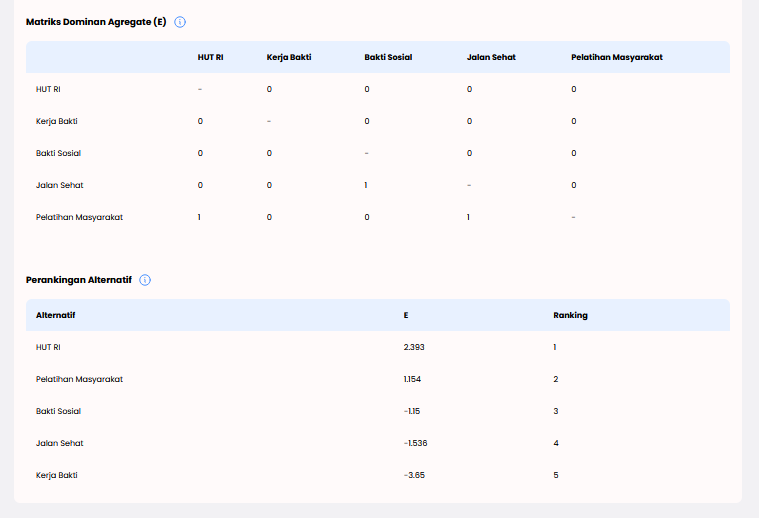
The engine is data-driven. Criteria carry a type (Cost or Benefit) and a weight; alternatives carry a score per criterion. Any method can rank the same matrix, which means the engine stays reusable across problems. The seeded use case ranks 10 neighborhood activities by 5 criteria, with Relevance and Social Impact as benefit criteria and Cost and Difficulty as cost criteria. The 7 methods implemented: The ranking pipeline is shared: build the decision matrix, normalize weights, run the method's scoring, and sort descending.
flowchart LR
    A["kriteria + bobot"] --> B["Decision matrix"]
    B --> C["Normalize (per method)"]
    C --> D["Score alternatives"]
    D --> E["Rank descending"]
    E --> F["Result view / API"]
Document Request Flow
A resident requests a letter (KTP, KK, birth certificate, SKCK, marriage, or other). The request lands in pengajuan with status Menunggu, an admin (Ketua RT) approves or rejects it, and an approved request generates the official letter as a PDF through DomPDF.
sequenceDiagram
    participant R as Resident
    participant C as DocumentRequestController
    participant D as Database
    participant K as Ketua RT
    participant P as DomPDF

    R->>C: Submit letter request
    C->>D: Create pengajuan (status Menunggu)
    C->>D: Create persuratan detail
    K->>C: List pending requests
    K->>C: Approve request
    C->>D: Set status Diterima + accepted_at
    R->>C: Request PDF
    C->>P: Render letter template
    P-->>R: Download PDF
Key Features
- 7 SPK Methods: SAW, SMART, EDAS, MABAC, MOORA, ARAS, and ELECTRE in one data-driven engine
- Resident & Family Cards: NIK-keyed residents grouped by family card, with business rules on family heads
- RBAC: Sanctum auth with a
checkRolemiddleware and 2 roles, including RT role transfer - Running-Balance Finances: Income and expense ledger that keeps the balance in sync on every write
- Document Requests + PDF: Official letters generated with DomPDF after approval
- Complaints (LAPOR!): Residents file reports with optional images and track status
- Inventory & Borrowing: Items with condition tracking (Normal, Rusak, Hilang) and borrow dates
- UMKM Directory: Local business listings with public pages and a paginated API
- News & Announcements: 5 content types with CKEditor and HTML sanitization
- Read-Only API: 20 Sanctum-protected endpoints exposing the same data to mobile or external clients
Routes
150 routes split between web and a read-only API. The web side covers public landing pages, resident self-service, and RT administration.
Technical Decisions
- Laravel 10 for its mature ecosystem, Sanctum auth, and Blade templating
- Generic SPK engine over hard-coded cases, so the same 7 methods rank activities, aid, or anything else defined in
kriteria - Sanctum + checkRole middleware for token auth and role checks on both web and API routes
- DomPDF for official letters that residents can download and print
- Intervention Image to resize resident photos and KTP uploads on the fly
- Purify to strip unsafe HTML from CKEditor content before it hits the database
- UUID primary keys for resident-facing records, keeping IDs unguessable in public URLs
Challenges
- Keeping 7 SPK methods consistent over one decision matrix took careful weight normalization and result checking
- Delegating CRUD while keeping code quality meant consistent reviews and written standards
- First production deployment taught me server configuration, SSL certificates, and domain setup
- The RT role-transfer flow had to demote the previous leader and force a re-login without breaking their session mid-action
Outcome
The system deployed and demonstrated at the course presentation, and the live site at saturt.cloud handled real usage. The decision-support engine ran 7 methods side by side, far beyond the single-method implementations other teams showed. Judges noted the breadth of the feature set and the analytical module.
Final Thoughts
SatuRT taught me that a generic engine beats a hard-coded feature. By keeping the SPK layer data-driven, I added methods without restructuring the app, and the same engine can rank activities today and aid recipients tomorrow. The lead role also showed me that delegation is about keeping quality high while others own their pieces. And the production deployment closed the gap between code that works on a laptop and code that holds up in the real world.